When you buy through links on our articles, Future and its syndication partners may earn a commission.

Your first major opportunity to spot shooting stars and bright fireballs in 2026 arrives overnight tonight with the peak of the Quadrantid meteor shower, though only the brightest members may be visible, as the annual event crescendos in the bright light of a full moon.
The Quadrantid meteor shower is active from Dec. 26, 2025 to Jan. 16, 2026, with a narrow peak lasting roughly six hours that unfolds in the period preceding dawn on Jan. 4, according to EarthSky.org. The shower owes its brief peak to the near-perpendicular angle at which Earth smashes through the thin debris trail left by asteroid 2003 EH1. Shooting stars appear when shards of ancient comets and asteroids collide with Earth, burning up in a fiery display as they are overwhelmed by friction.
Quadrantid meteor showers are capable of producing impressive displays, with up to 200 shooting stars visible each hour under dark sky conditions around the peak. Unfortunately, the 2025-6 shower comes to a head in the light of a full moon, whose glare will wash out all but the brightest meteors. NASA predicts an hourly rate of just 10 meteors per hour on the night of the peak. The January full moon is often called the "Wolf Moon", in reference to the predators that have been heard howling at Earth's satellite during the scarcity of winter.
Meteors associated with the Quadrantid shower appear to come from a patch of sky close to the "handle" of the famous Big Dipper asterism in the constellation Ursa Major — a circumpolar constellation that never sets for stargazers in the Northern Hemisphere. As such, the shower is best viewed from locations north of 51 degrees latitude.
The shower gets its name from a constellation created by French astronomer Jerome Lalande in 1795, known as Quadrans Muralis, which occupies this space near the Big Dipper, according to NASA. The constellation, however, was not chosen as one of the 88 constellations formally recognized by the International Astronomical Union (IAU).
The radiant will rest low on the northern horizon after sunset, but soars high overhead during the pre-dawn peak-viewing hours. Quadrantid meteors can appear in any part of the sky, though it's best not to look exactly in the direction of the radiant, where the trails will be at their shortest.
Hoping to immortalize your view of the Quadrantids? Then be sure to check out our guide to photographing shooting stars and if you're looking to upgrade your equipment, see our picks of the best cameras and lenses for astrophotography. .
Editor's Note: If you capture an image of a Quadrantid meteor and want to share your astrophotography with Space.com's readers, then please send your photo(s), comments, and your name and location to [email protected].
LATEST POSTS
- 1
 New Year's Eve Live: Nashville's Big Bash: How to watch the star-studded country music special live
 - 2Day to day Temporary Positions That Compensate Fairly in the US
- 3Instructions to Upgrade the Security Elements of Your Kona SUV
- 4How does Spotify Wrapped calculate your listening age? What your number says about you.
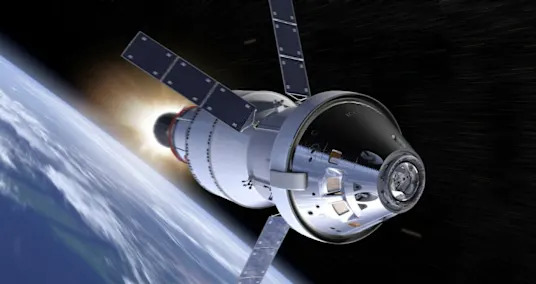
- 5Here's what the Artemis 2 astronauts will be doing on each day of NASA's historic moon mission


- Instructions to Boost Your True capacity with a Brain research Degree
- The Meaning of Breaking the Pen's Nib in Death penalties
- Israel's ban on unsupervised reporters in Gaza causes strategic harm to legitimacy
- The most effective method to Pick the Right Volvo XC40 Trim for Your Way of life
- Blue Origin launches huge rocket carrying twin NASA spacecraft to Mars
- 'The Drama' plot twist, explained: What did Zendaya's character do, and what happens to her wedding?
- This country music star spent years hiding his sexuality. Coming out — and beating addiction — has made his soul feel '20 pounds lighter.'
- Find Unexpected, yet invaluable treasure Excursion Rentals
- A Gastronomic Experience in Healthy Enjoyments: A Survey of \Nutritious and Tasty\ Solid Cooking Recipe Book